
by Jen Santoro
Skiers enter the sport at all ages, with a wide range of backgrounds and skills. Some seemingly emerge from the womb in baby Crown Sprints, while others arrive after a career in other endurance sports. The difference is that we teach skiing to kids very differently from adults. Many a new adult skier has achieved a decent result or two, but whether or not they did it efficiently is the bigger question. Improving on that result may not look the same for skiing as it does for other sports.
Intervals Aren’t the Solution
Exposing the most unpopular opinion first—no matter how high your heart rate, the size of your V02 max, how meticulous your training plan, if you aren’t getting the full range of motion, power, and glide on a ski, intervals won’t help as much. Especially if you are already fit. While building V02 max at the same time as aging is possible, doing so at the expense of technique acquisition might not be the fastest way to go fast.
Technique is Everything
In an article published in the April 2024 issue of TUNA News, I made the case for learning to kick wax and ski classic. In last month’s edition, Pete Vordenberg wrote about failure and the generation of myelin1. Together, the two ideas show why classic is the ultimate teacher of weight shift. Do it right, wire in the successful movement. Do it wrong, the instant failure is an opportunity to try again, immediately. Myelin wraps the correct pathways.
How We Learn to Ski
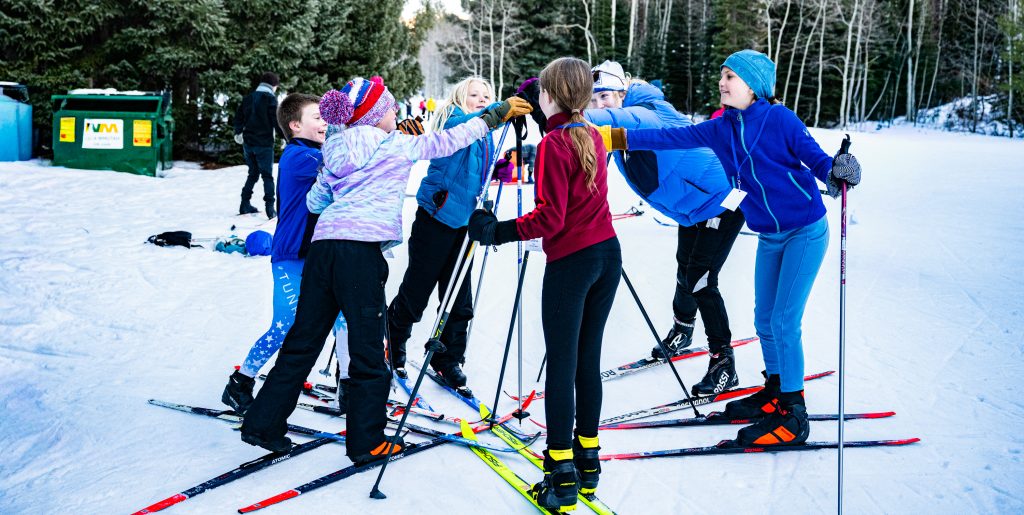
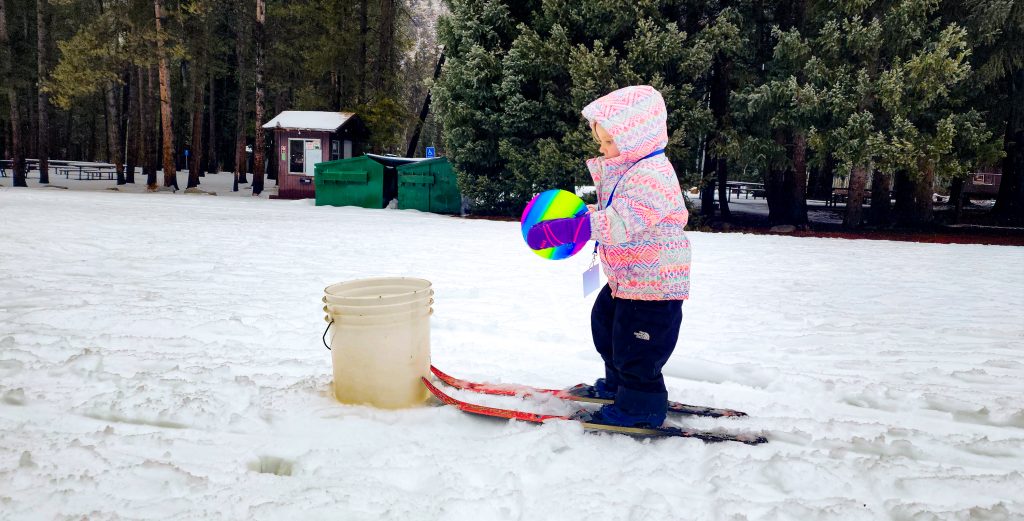
When Learn-to-Ski and Devo hit the snow in January, they’re sent out with no poles and classic skis. There is no course, no distance to be skied. There are occasional tantrums. All we have for them is an environment of imitation, drills, and games.
When adults start skiing, there is a tendency to instruct, a rush to “successful skiing”, and when all is said and done, more is said than done. There are occasional tantrums. The environment most often focuses on deliberate motions via demonstration and can lack the play-based nature of experiential learning. This is understandable—grownups have already lost years, so they need a fast track to catch up. Adults, presumably, have a higher capacity for attention and a motivation to learn.
There’s a good chance that if we started adults the way we start kids, they would learn skills faster and develop more automaticity, and it’s based in neuroscience.
Why?
It goes back to the myelin and the development of the subconscious. The older we get, the less plastic our nervous system gets. We actually lose myelin—that insulation around our neuropathways that allows quick, subconscious movement. But we are also capable of building it, albeit at a slower pace than kids.
Think about a time in training, when everything is clicking, and those new technique hints someone showed you are finally starting to kick in. Then think about a time in racing when that has all gone out the window for the moment, as you push to catch that guy from Idaho who has always gotten you by just two seconds. Now imagine if you could be on autopilot, skiing without having to think about it. That’s automaticity: the ability for you to perform a series of actions without having to think about them.
Hockey players are an excellent example of automaticity. Decent players are not thinking about how to skate, turn, or stop. Skating is subconscious and automatic. They’re looking for the pass and the puck, focusing on the play.
For junior skiers, skiing is automatic. Often, an accomplished skier has a hard time explaining what it is they’re doing to make their body ski so smoothly. That’s because they likely learned to ski in their subconscious. How? Games.
“Drills Make Skills, Games Make Change”
This is a quote directly from the US Ski Team Development Coach, Greta Anderson. Here’s why.
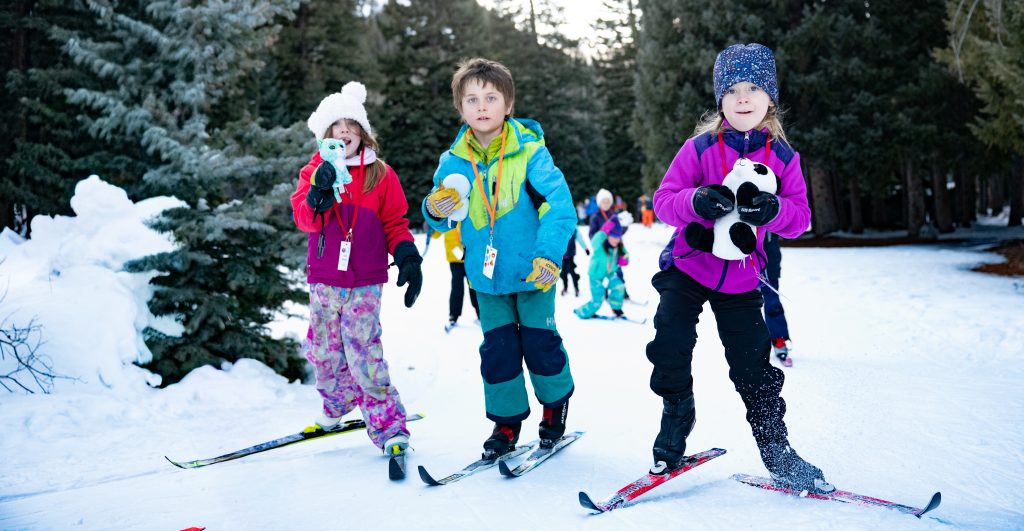
Kids are amazing in that they’re not as self-conscious as adults. Kindergarteners don’t care if they look like Klaebo when they’re playing one-ski soccer or Sharks and Minnows. They care about the game. And as they play, they fail and succeed in a safe and non-consequential environment. Glide better? Score a goal. They don’t even know they did it, but that glide on a ski is being wired in. Most youth programs begin with classic, so weight shift via failure to propel is wired early and often. The ABC’s of skiing (agility, balance, coordination) are learned by experience and feel, not taught.
Drills Enter the Chat
No ski education can exist without a little coaching. That’s when drills come into play. US Cross Country Development Director Bryan Fish loves the term “perturb,” meaning it forces a position, skill, or series of movements. The most successful drills force this at a level of experience rather than description—the best drills require almost no explanation. The skier ends up in the correct position, using proper technique, because the drill demands it.
Cornering drills are a good example; one can navigate a corner far more smoothly when skiing close to the ground. As one of my favorite White Pine coaches, Lou Awody says, “get low and sneaky.” It’s short, descriptive, and develops automaticity because it feels right, and it is a successful movement. A good drill, a small hint (there’s your coaching), and that’s where the learning takes place.
Strength
Strength training has long been lauded as something everyone in any sport should do to prevent injury and excel at their sport. Our resident strength coach, Art O’Connor, trains cyclists, climbers, runners, and our Comp kids with a technique-first, load-later philosophy. That’s another article, but everyone should do some strength training.
Speed
There is a difference between “speed” and “quickness”, and to be a great skier, one needs both. I’ve stolen this concept from the sport of figure skating, but it applies well in skiing; speed is how fast one travels over the snow, and quickness is how quickly your limbs are moving.
Wiring your brain to have faster turnover means you have that in your pocket when you need it. As we age, the “fast twitch” subsides, but training it can keep it in the forefront.
When you have the quickness and the proper position on skis, you can leverage strength with a quick, powerful movement that allows a longer glide, and therefore a “micro rest” phase that, simply put, creates speed.
Practice Makes Permanent
When we practice movement with intention, it creates the insulated pathways to automatic movement. Unfortunately, the brain doesn’t know if that move is correct or incorrect. This is why old habits are so hard to break. If you can learn it right the first time, great! If you haven’t, then it will require very intentional reprogramming.
Now What?
There are plenty of articles about how to train for endurance. Cross-country skiers have been ahead of the curve in understanding that to train a great aerobic base, doing about 80+% of your training below about 72% of your max heart rate is the key. Hardly anyone does this. It requires a deep and honest conversation between you and your Garmin—multiple articles about training and tech are available on the TUNA website under “Programs-Training for Ski Racing.” We have heard plenty about Zone 2 recently, which is essentially very low aerobic base training.
Here’s how you can make all of those slow skis a whole lot more interesting. Instead of skiing along in Level 2.5 all the time, which makes you neither fast nor improves V02 max, try playing.
To begin, if you’re rewiring your movement while trying to train for a specific objective, consider doing your hardest training (intervals) off your skis and in the mode where you’re most skilled. The best skiers do much of their training on foot (running, hiking, bounding) and abide by the mantra “skiers are made in the summer.” Rollerskiing is a great mimic for skiing, but incorrect rollerskiing reinforces incorrect skiing technique. On snow, focus on correct movement only, and don’t let it go to pieces by going hard.
Second, ski slowly and throw in speed. At 15 seconds, you’re not tapping into the systems that make you tired. Move quickly and pay attention to position. Glide intentionally. Be snappy.
Next, volunteer with a youth program. No, this isn’t a lame attempt to recruit more coaches (but please coach). Playing games with kids will, without a doubt, improve your skiing for the same reason it is the primary method used by ski programs. Reasons are above.
Last, watch the World Cup. The mere act of watching a lot of good skiers will help develop that myelin. Your subconscious is working all the time, and when the film in your head looks like a World Cup skier, you will find yourself imitating that—even when you aren’t thinking about it. And that’s the goal.
Recommended reads:
1. Coyle, D. (2009). The Talent Code: greatness isn’t born. It’s grown. Here’s how. Bantam Books.
2. Bargh, J. A. (2019). Before you know it: the unconscious reasons we do what we do. Atria Paperback.
